The Intelligent Companion: AI Integration Reshaping Wearable Tech
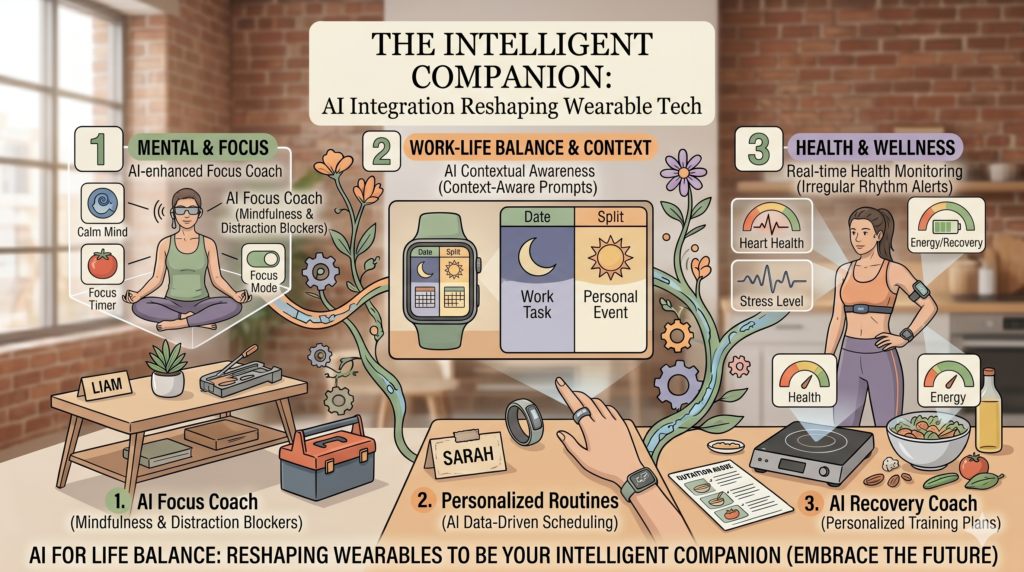
The Intelligent Companion: AI Integration Reshaping Wearable Tech
The evolution of wearable technology has been nothing short of remarkable. From basic pedometers to sophisticated smartwatches, these devices have become integral to our daily lives. Yet, their true potential is only now beginning to unfold, driven by the transformative power of Artificial Intelligence. The convergence of AI and wearable devices is not just an incremental upgrade; it’s a paradigm shift, promising a future where our gadgets are not merely tools but intelligent companions, offering proactive insights and hyper-personalized experiences. This article explores how AI integration in wearable devices is redefining personal health, fitness, and our interaction with technology.
Beyond Step Counts: The Rise of Predictive Health Analytics
Early wearables excelled at tracking quantifiable metrics like steps taken and calories burned. Today, AI elevates this data into actionable, often life-saving, insights. Advanced algorithms analyze continuous streams of biometric data – heart rate variability, sleep patterns, blood oxygen levels, skin temperature, and even ECG readings – to detect subtle changes that could signal an impending health issue.
Early Detection and Personalized Insights
Imagine a smartwatch that doesn’t just record an irregular heartbeat but alerts you to potential atrial fibrillation, prompting you to seek medical advice. Devices like the Apple Watch and certain Fitbit models already offer these capabilities, thanks to embedded AI. This proactive approach to health moves beyond reactive care, empowering individuals with an unprecedented understanding of their own physiology. AI models can learn an individual’s unique baseline and identify deviations that might indicate stress, illness, or even the onset of chronic conditions long before symptoms become apparent.
Continuous Monitoring for Chronic Conditions
For individuals managing chronic conditions, AI-powered wearables offer continuous, non-invasive monitoring. Devices equipped with AI can track glucose levels for diabetics, monitor blood pressure for hypertensive patients, and even analyze tremor patterns for neurological disorders. This constant data flow, interpreted by AI, provides healthcare professionals with a richer, more accurate picture of a patient’s health trends, leading to more informed treatment decisions and better disease management.
Your Personal Coach: Real-time Personalized Coaching
The gym trainer, the nutritionist, the meditation guru – AI is integrating these roles directly into our wearable devices, delivering hyper-personalized coaching that adapts to our unique needs and progress. This isn’t just about preset workout routines; it’s about dynamic guidance.
Adaptive Fitness and Wellness Plans
AI algorithms can analyze your performance during a workout, assess your recovery through sleep and heart rate data, and then recommend optimal adjustments to your training regimen. If you’re overtraining, your smart ring might suggest a rest day. If your sleep quality is poor, your smartwatch might recommend a guided meditation. The Oura Ring, for example, uses AI to provide a daily “Readiness Score” based on physiological signals, guiding users on when to push themselves and when to prioritize recovery.
Posture Correction and Stress Management
Beyond physical exertion, AI wearables can tackle subtle aspects of wellness. Smart garments embedded with sensors can monitor posture in real-time, providing haptic feedback or audio cues to correct slouching. For mental well-being, AI can detect rising stress levels through heart rate variability and suggest calming exercises or breathing techniques, often integrated directly into the device’s interface. This continuous, unobtrusive guidance transforms wearables into truly personal health and wellness advisors.
Seamless Experiences and Enhanced Accessibility
AI isn’t just about crunching health data; it’s also about making our interactions with technology more intuitive, natural, and accessible.
Voice Assistants and Context-Aware Interactions
Voice assistants like Siri, Google Assistant, and Alexa are increasingly integrated into smartwatches and other wearables, allowing users to control devices, send messages, and get information through natural language. AI also enables context-aware interactions. Your wearable might learn your daily routine and preemptively suggest actions – like reminding you to stand up after a long period of sitting or automatically adjusting notification settings based on your location (e.g., muting during a meeting).
Empowering Accessibility
For individuals with disabilities, AI integration in wearable devices offers transformative accessibility features. Fall detection systems on smartwatches can automatically alert emergency contacts if a wearer takes a hard fall. Haptic feedback driven by AI can provide navigation cues for the visually impaired. Gesture recognition, powered by machine learning, allows for control of devices without direct touch, opening new avenues for interaction for those with motor impairments. AI’s ability to understand and adapt to individual needs makes technology more inclusive than ever before.
The Data Challenge and Ethical Considerations
While the promises of AI in wearables are vast, they come with significant responsibilities. The very intimacy of the data collected – our most personal health metrics – raises crucial ethical and privacy questions.
Privacy and Security Concerns
The constant collection of sensitive biometric data creates a goldmine for insights, but also a potential target for breaches. Ensuring robust cybersecurity measures and transparent data handling practices is paramount. Users must have clear control over who can access their data and how it is used. Companies developing these technologies bear the heavy responsibility of protecting this information.
Bias in AI Algorithms
AI models are only as good as the data they’re trained on. If training datasets are not diverse and inclusive, algorithms can exhibit bias, leading to less accurate or even harmful insights for certain demographic groups. For example, if a health prediction model is predominantly trained on data from one ethnicity, its accuracy might be compromised when applied to another. Addressing this requires careful attention to dataset diversity and rigorous testing.
What’s Next? The Future Landscape of AI in Wearables
The current generation of AI-powered wearables is just the beginning. The future promises even more sophisticated integration and capabilities.
Miniaturization and Ubiquitous Integration
Expect to see AI-powered sensors disappear into even smaller, more discreet forms – smart patches, intelligent fabrics, and invisible implants. The goal is to make the technology seamlessly integrate into our lives, becoming truly ubiquitous and unnoticeable until needed.
Advanced Bio-Sensing and Proactive Intervention
Future wearables, driven by advanced AI, could offer non-invasive monitoring of complex biomarkers like blood sugar without needles, hydration levels, and even specific disease markers. This could lead to genuinely proactive health management, where AI identifies potential issues and offers interventions or recommendations before they escalate. Imagine a wearable that detects early signs of a viral infection and suggests specific rest and hydration protocols, or even recommends a telehealth consultation.
The Promise of Personalized Medicine
Ultimately, the deep integration of AI into wearable devices lays the groundwork for truly personalized medicine. With continuous, individual-specific data, healthcare can become predictive, preventive, personalized, and participatory – a future where each person’s unique biology and lifestyle are central to their health journey.
Frequently Asked Questions (FAQ)
How does AI improve wearable devices?
AI transforms raw sensor data from wearables into meaningful, actionable insights. It enables predictive health analytics, personalized coaching, context-aware user experiences, and enhanced accessibility features by learning patterns, identifying anomalies, and adapting to individual user needs.
What are the main privacy concerns with AI wearables?
The primary concerns revolve around the collection and storage of highly sensitive personal health data. Ensuring robust data security, transparent data usage policies, and giving users explicit control over their information are critical to addressing these privacy issues.
Will AI wearables replace doctors?
No, AI wearables are designed to be powerful tools that augment human healthcare, not replace it. They provide continuous data and early alerts that can empower individuals and assist medical professionals in making more informed decisions. They are companions in health management, not substitutes for professional medical diagnosis or treatment.
What types of AI are commonly used in wearables?
Common AI techniques include machine learning for pattern recognition (e.g., detecting heart anomalies, sleep stages), natural language processing for voice assistants, and deep learning for advanced image and signal processing. These AI models are often trained on vast datasets to identify complex relationships in physiological data.
What’s the difference between a smartwatch and an AI wearable?
Many modern smartwatches are AI wearables, as they integrate AI capabilities for features like health tracking, voice assistants, and personalized insights. The term “AI wearable” broadly refers to any wearable device that leverages artificial intelligence to provide intelligent functionalities beyond basic data collection, whether it’s a smartwatch, fitness tracker, smart ring, or smart garment.
Conclusion
The journey of wearable technology, amplified by AI integration, is charting a course towards a future of unprecedented personalization and proactive well-being. From safeguarding our health with predictive analytics to coaching us toward fitness goals and simplifying our daily interactions, AI-powered wearables are becoming indispensable allies. While challenges around data privacy and ethical development remain critical, the trajectory is clear: our intelligent companions are poised to redefine not just how we interact with technology, but how we understand and manage our own lives. The next generation of wearables will be more than just devices; they will be extensions of ourselves, continuously learning, adapting, and empowering us to live healthier, more connected lives.
Category: WEARABLES
Tags: AI, Wearable Tech, Health Tech, Fitness Trackers, Smartwatches, Personalized Health, Future Technology, IoT